Why We Built MicroLearnerAI
2026-08-07 · Tasman Goff · Last updated 2026-08-07
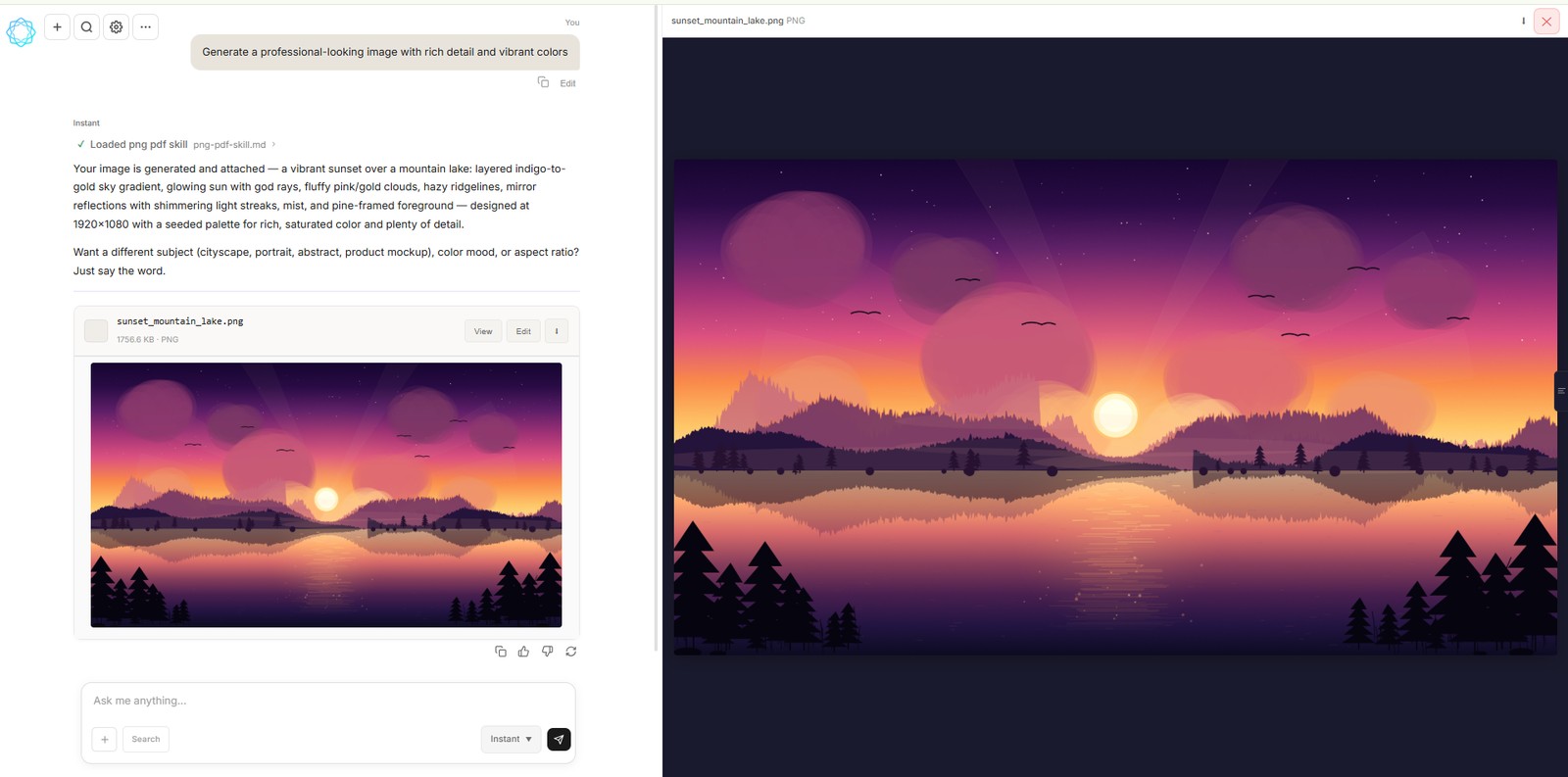
A real MicroLearnerAI session: asked for an image, got a finished PNG — generated, viewable, and downloadable without leaving the chat.
MicroLearnerAI exists because of a gap we kept tripping over ourselves: chatbots answer questions, and app builders build apps — but most of what people actually ask an AI for is neither. It's a spreadsheet. A chart. A slide deck for tomorrow's meeting. A small tool that does one job. This is the story of why we built a chat that just makes the thing, and what we had to figure out to make it affordable enough to give away a free tier.
The gap: answers on one side, apps on the other
On one side you have the general-purpose chatbots. They're genuinely good at writing code — but what you get back is a code block, and running it is your problem. If you've never set up a Python environment, that's where the project quietly dies. You asked for a chart of your expenses and you got forty lines of matplotlib and a shrug.
On the other side you have the AI app builders — Lovable, Replit, and friends. They'll build you a real, hosted web app, and they charge accordingly: Lovable Pro and Replit Core both sit at $25/month, as of mid-2026. That's a fair price when you want a product with a URL, a database, and users. It's a strange price when what you actually wanted was a formatted .xlsx of this quarter's numbers.
We kept watching people — ourselves included — pay app-builder prices, or wrestle with code blocks, for requests that were never apps at all. The artifact was the point. The conversation around it was just the interface.
What we wanted: the working thing, in the chat
So the design goal for MicroLearnerAI was narrow on purpose. You ask for a thing in plain English, the AI writes the code to make it, and then — this is the part that matters — it runs that code mid-conversation and hands you the finished artifact in the chat. A real .pptx you can open in PowerPoint. A real .xlsx with your data in it. A real .png. Each file is attached to the conversation with View, Edit, and download actions, so you can inspect it, tweak it, or take it elsewhere.
Running code on someone's behalf obviously needs a guardrail, so every run goes through a review-and-approve step: Run, Always allow, or Cancel. You see what it's about to execute before it executes. That's not a feature we bolted on for the pitch deck — it's the only honest way to do this.
The chat home reflects the scope: four capability cards, not forty. Presentations, Code & Files, Charts & Excel, and Image Creation. Decks, reports, spreadsheets and charts, images. The stuff people were already asking chatbots for, finished instead of described.
The economics: why this can be cheap
Here's the part most origin stories skip. Running code in chat isn't just a design decision — it's a cost decision. Every conversation burns tokens, and if your model costs what the big-name models cost, "ask for a spreadsheet" has to live behind a $25 paywall or a free tier so small it's a demo.
MicroLearnerAI runs on DeepSeek: a frontier-class model with a per-token cost low enough to change the math. That's the whole trick, and it's not really a trick — it's just choosing an engine whose economics match the product. It's why there's a genuine free tier (usage resets every 5 hours, so it's usable every day, not just on day one) and why Pro lands at $12/month with roughly 4.5× the free usage and pre-built skills, instead of the $25 the app builders need to charge. There's an "Instant" mode selector in the composer when you want speed over depth, and a BYOK option in settings if you'd rather run on your own API key.
Everything around the chat
A chat that makes things gets more useful the more it can reach. MicroLearnerAI connects to Google (Gmail, Drive, Calendar — one sign-in), Slack, Notion, AWS, and 9,000+ apps through Zapier, plus a set of free dev and data connectors like GitHub, Hugging Face, Exa, and Alpha Vantage. Connected tools become callable tools in the conversation, so "pull the numbers from that Sheet and chart them" is one request, not an afternoon.
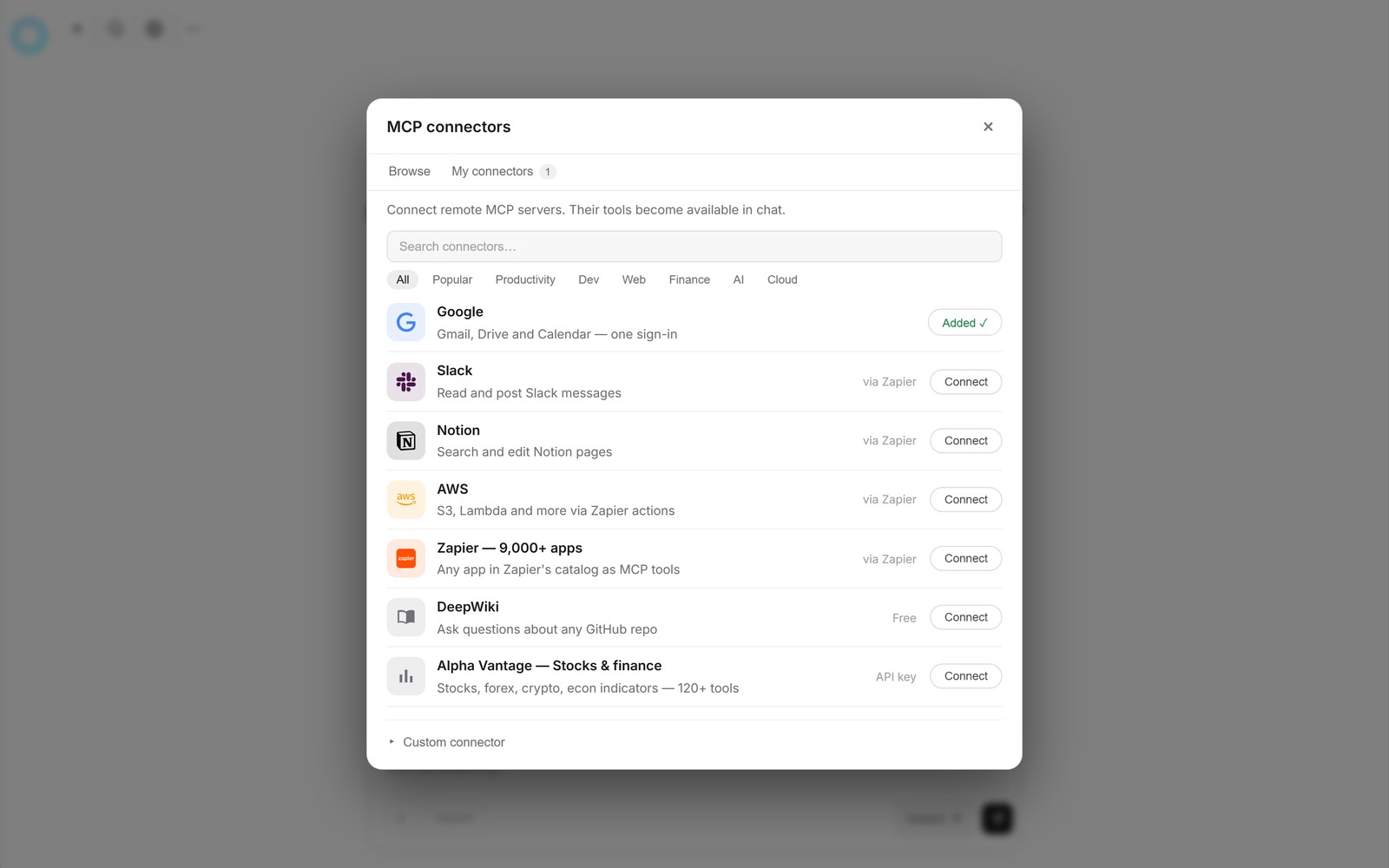
The connector browser: Google, Slack, Notion, AWS, Zapier, and a bench of free dev/data connectors — each one becomes a tool the chat can call.
Two more pieces round it out. Skills are versioned, shareable files that teach the AI a repeatable workflow — the built-in PNG/PDF and Excel skills are examples — and the community library already lists 364 skills you can install, fork, edit, or publish. And scheduled tasks let you ask in chat for recurring work ("summarize top AI news every weekday at 9am"); the task runs on schedule and the results arrive as a ⏰ conversation in your chat list.
The honest caveats
We're in beta. The homepage is a coming-soon page while the app is live for early users, so if you visit today you'll find the launch list, not a signup wall we've dressed up as something else. The product is young, the skill library is growing rather than complete, and if what you need is a hosted, public-facing web app with a database, the app builders remain the right tool — we built MicroLearnerAI for the other ninety percent of requests.
Frequently asked questions
Why build MicroLearnerAI instead of another app builder?
Because most requests aren't apps. People ask AI for spreadsheets, charts, slide decks, PDF reports, and images — and a chatbot hands back text while an app builder builds a whole hosted web app. MicroLearnerAI writes and runs the code mid-conversation and gives you the finished file right in the chat.
How can MicroLearnerAI afford a free tier?
It runs on DeepSeek, a frontier-class model with a much lower per-token cost than the usual options. Running code in chat costs us less per conversation, so a free tier (usage resets every 5 hours) and a $12/month Pro plan are viable.
Is MicroLearnerAI a Lovable alternative?
Only partly. If you want a polished, hosted, public web app, Lovable is built for that (Lovable Pro is $25/month, as of mid-2026). MicroLearnerAI is for the more common case: you asked an AI for a thing, and you want the working thing.
Can I use MicroLearnerAI today?
It's in beta — the homepage is a coming-soon page while the app is live for early users. Follow the launch at microlearnerai.com.
MicroLearnerAI is in beta. Follow the launch at microlearnerai.com.
New to the app? Start with how the harness works.